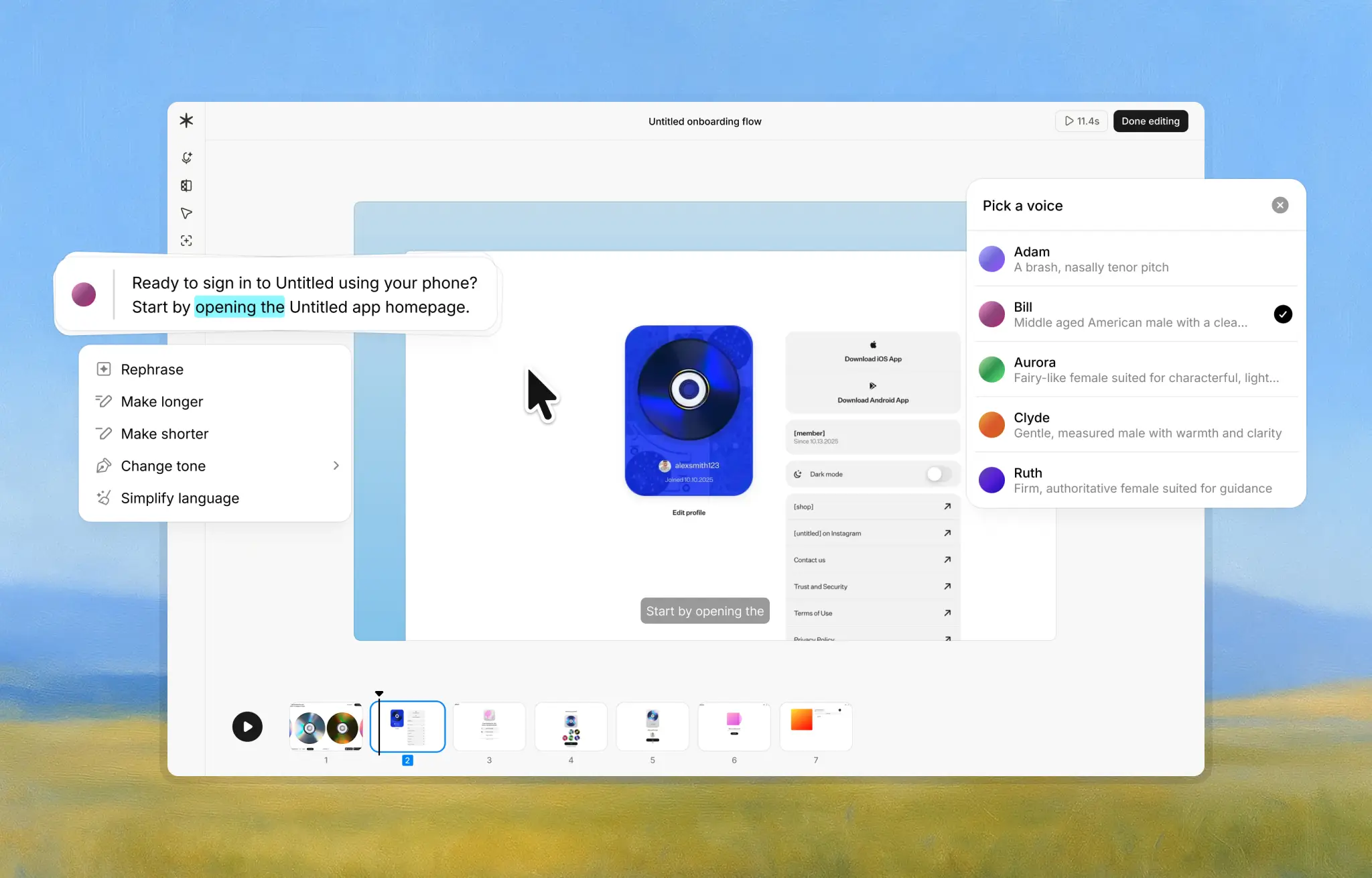
A few months ago, we spoke with a Customer Success Lead who shared a situation that felt incredibly relatable. Their team was growing, their product was evolving quickly, and new hires were joining almost every month. But despite everyone’s best intentions, nothing was documented properly.
“Our team knows what to do. We just don’t have it documented anywhere… and honestly, nobody has time.”
It is a sentence we have heard many times, from teams of every size. Everyone agrees that documentation is important, SOPs, onboarding workflows, training guides, handover notes, but everyone is also overwhelmed. When you ask where these workflows actually live, you usually get a small smile, a shrug, and then a scavenger hunt begins.
There is a Google Doc that has not been updated since last year. A Notion page that only one person knows how to find. A folder with screenshots named “final_final_v3.” A Loom recording no one has watched. A Slack message someone pinned but never resurfaced. Sometimes all of the above.
The problem is not that teams do not want documentation. The problem is that documentation usually demands more time than teams can give.
This is the gap we built Guideless for.
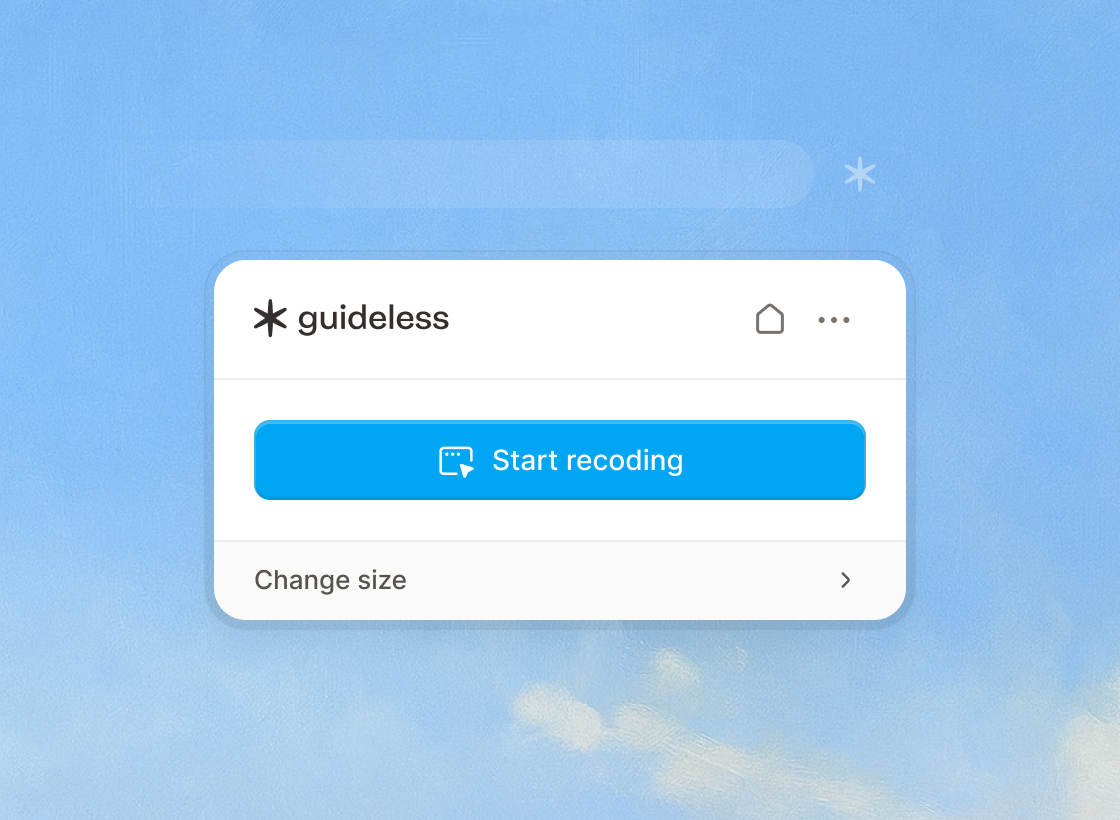
If you are discovering our product for the first time, here is a helpful introduction: What is Guideless? A complete overview for product teams
Why Documentation Feels Impossible to Keep Up With
Most people do not avoid documentation because they dislike the concept. They avoid it because documentation is one of the few tasks that feels both essential and endlessly time consuming.
To document even a simple workflow, you usually need to walk through the steps manually, take screenshots, crop and annotate them, write clear instructions, format everything neatly, and then hope nothing in the product changes next week. If it does, the guide is instantly outdated.
What was meant to be a 10 minute task becomes a 90 minute one. Multiply that across dozens of workflows and the backlog grows faster than anyone can manage.
As a result:
- Teams fall back on tribal knowledge.
- New hires shadow for weeks because nothing is written down.
- Customer onboarding becomes inconsistent.
- People ping the same “expert” repeatedly for help.
- Support teams rewrite the same answers every day.
- And product managers end up explaining features again and again because there is no single source of truth.
This is not a sign of a disorganized company. It is simply the reality of modern software work. If this frustration feels familiar, here is a deeper breakdown of how modern teams document smarter with AI SOPs
You can also browse other training and documentation articles in our Best Practices category.
The Idea Behind Guideless: Capture Workflows as You Work
When we started building Guideless, we kept coming back to a simple question:
"What if documentation did not feel like documentation?"
Instead of treating documentation as a separate task, what if it happened naturally, as a byproduct of doing your work?
That was the spark.
You open your browser, complete a workflow the way you always do, and Guideless captures everything in the background. It records your clicks, detects the steps, generates visuals, and turns the workflow into a clear, clean, ready to share guide. You finish the task, and the documentation is already waiting for you.
No manual screenshots.
No rewriting instructions.
No time spent formatting.
No fighting with templates.
And no need to set aside a dedicated block of time.
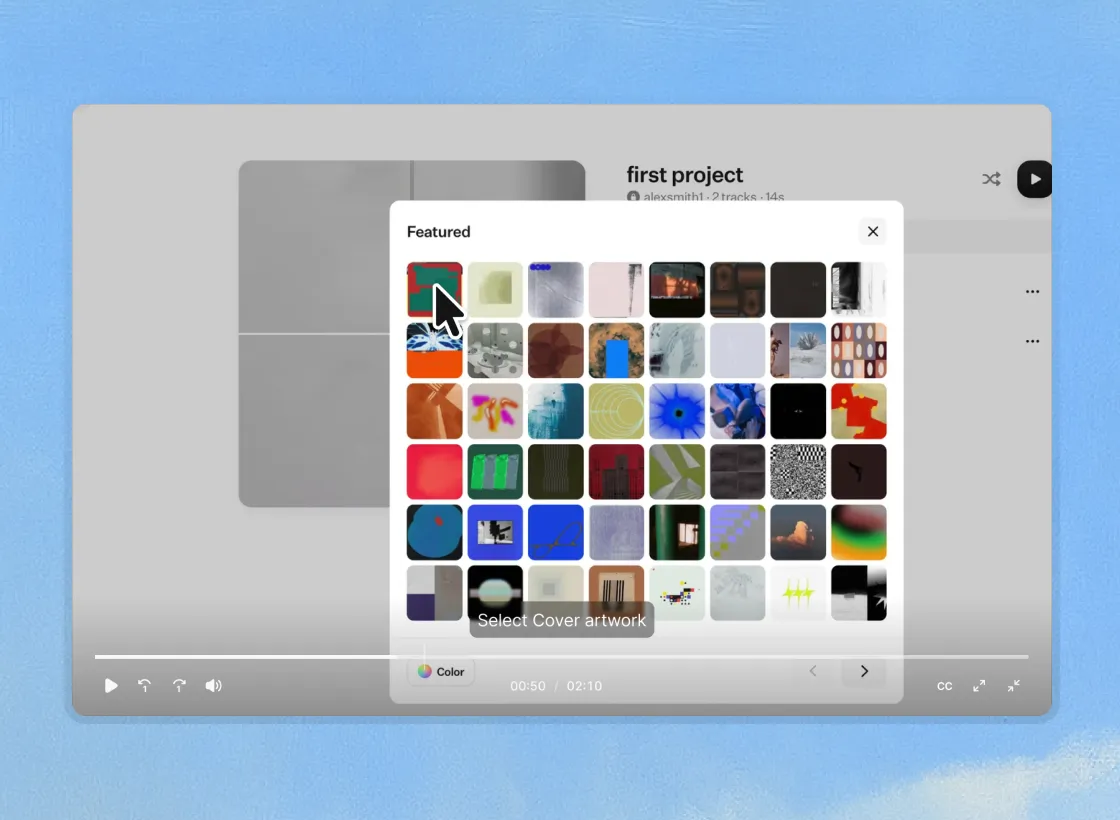
Teams that once postponed documentation indefinitely suddenly find themselves capturing workflows several times a week. Not because their habits changed, but because the effort required fell close to zero.
If you want to see how this plays out in practice, here is a real example from a team that adopted Guideless early: ForgetBill x Guideless: Customer Onboarding With AI Walkthroughs
"Seeing our onboarding workflow run inside Guideless made the potential clear immediately. We can scale customer education without hiring more support and create demo-ready content for launches at the same time."
Matas Malinauskas, Founder & CEO · ForgetBill
For a deeper look at the underlying technology, check out Workflow AI explained
Documentation as a Growth Tool, Not a Burden
Teams often underestimate the ripple effects of clear documentation. When workflows are captured accurately and kept up to date, everything downstream becomes easier. Decisions move faster. People onboard more smoothly. Support scales with fewer headaches. Mistakes decrease because instructions are no longer scattered across five different tools.
For new employees, a complete onboarding system can mean the difference between two weeks of uncertainty and two days of productive work. If you are designing internal onboarding, this is a good companion guide: Employee onboarding workflow creator
For Customer Success teams, documentation shapes the entire user experience. A customer who knows exactly how to use a feature becomes confident, independent, and engaged. They reach value faster. They ask fewer repetitive questions. They adopt more features. You can explore this in more depth here: Guideless for Customer Success
Support teams benefit enormously too. When the right steps are documented well, ticket deflection improves, internal communication becomes smoother, and repetitive assistance drops. This guide breaks down how that works: Guideless for Customer Support
And for sales engineers or technical enablement teams, clear workflows reduce prep time and allow them to showcase features more consistently: Sales engineering training with AI guides
Documentation is not just a record. When done well, it becomes a growth engine.
Why Most Documentation Tools Still Feel Heavy
There are many documentation tools available, and each approaches the problem differently. But most of them share a similar limitation. They still require you to pause your work and switch into documentation mode. You need to write, edit, design, arrange, polish, and share. These tools help you build documentation, but they do not remove the burden of creating it.
People want documentation that is automatic, seamless, and consistently accurate. They want something that lives inside their existing workflows. They want a guide to appear after the work is done, not a blank template waiting to be filled.
That is why our focus has always been simplicity. We designed Guideless so that it feels natural, almost invisible. The product steps back so your workflow can be the hero.
If you are exploring your options, our comparison pages can offer more context about where Guideless fits:
Keeping Documentation Up to Date Without the Pain
Even when teams manage to document something once, the next challenge is keeping it up to date. Products evolve quickly. Interfaces change. Steps shift. New features appear. Old steps disappear. Few things become outdated faster than a workflow guide.
With traditional documentation, you need to revisit the original file, update the screenshots, rewrite the steps, and adjust formatting. This is why so many teams end up with outdated materials after only a few months.
Guideless eliminates this problem.
Updating a guide is as simple as performing the workflow again. You complete the sequence, Guideless captures it, and you have a fresh version in moments.
A living documentation system becomes possible.
A Tool That Disappears Into Your Workflow
The best tools are often the quietest ones. They do not demand attention or disrupt your flow. They simply support you as you work.
This is how we think about Guideless.
No steep learning curve.
No complicated setup.
No templates to customize endlessly.
You record your workflow, and the product takes care of the rest.
What you get is a polished, shareable, human friendly guide that looks like it took an hour to create, even though it took minutes.
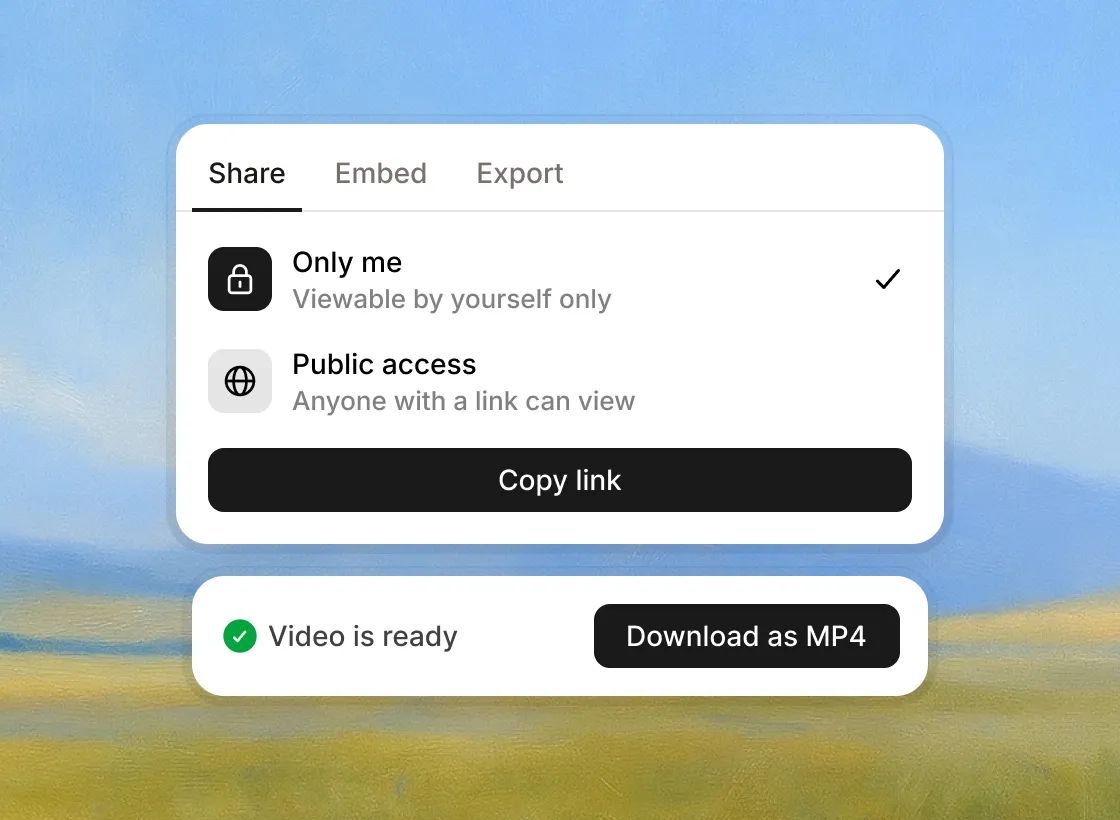
If you want to see how other teams are using these guides, you can explore real examples browse the Guideless Gallery
What Comes Next
We built Guideless because we saw how often documentation became a blocker instead of a bridge. Teams were not struggling due to lack of care or discipline. They were struggling because the tools available made documentation feel slow, rigid, and distracting.
Our roadmap reflects that belief. We want capturing workflows to feel even faster. We want collaboration to feel more natural. And we want the product to stay simple, friendly, and surprisingly fun, even as it grows.
👉 Try creating your first guide today. It takes less than a minute.